
Screven County Arrest Records and Charges
Screven County arrest records are tied to the Sheriff's Office, jail, arresting agency, and booking process. The county public-safety page lists the Screven County Sheriff's Office at 202 Rocky Ford Road in Sylvania, and the staff directory names Sheriff Norman Royal. Booking information can include the arrestee name, booking date, arresting agency, charge text, bond, warrant number, and release status if the information is releasable. The research did not locate an official online Screven jail roster, so custody questions should start with the jail or Sheriff's Office rather than unofficial roster sites.
Court charge records are different. They begin when the prosecutor or court files the charge that will be tracked through a court case. A single arrest can produce no filed charge, one filed charge, or several counts. A first booking label may later become an accusation, indictment, reduced charge, dismissed charge, nolle prosequi, dead docket entry, plea, or sentence. For the full case file after charges are filed, use the Screven County criminal court records page.
Find Screven County Arrest Records
The official access path depends on the stage. If the person may be in custody, call the Screven County Jail or Sheriff's Office. If charges have been filed, check Screven Superior or State Court through PeachCourt, Georgia e-access provider links, or the Clerk of Superior Court. If the matter is still at the warrant or first-appearance stage, Magistrate Court may hold the useful record. If the case is a city citation or ordinance matter, the municipal court may be the better source.
- Start with the arrest date, full legal name, date of birth, and arresting agency if known.
- Call the jail for present custody, bond, hold, and release-status questions.
- Check the court provider path for Screven Superior or State if a case number or court date exists.
- Read each charge count separately because one arrest may split into several court charges.
- Ask the clerk for certified copies if a charge record must be used as official proof.
State systems answer different questions. The GDC offender search is for sentenced offenders in state custody and may not show current county-jail detainees. The Georgia.gov offender search guide explains name, ID, case number, age, and identifier search options, while noting county jail offenders may require the county website or local channel.
Image source: the Georgia Department of Corrections offender query is a statewide sentenced-offender fallback, not a local arrest blotter.
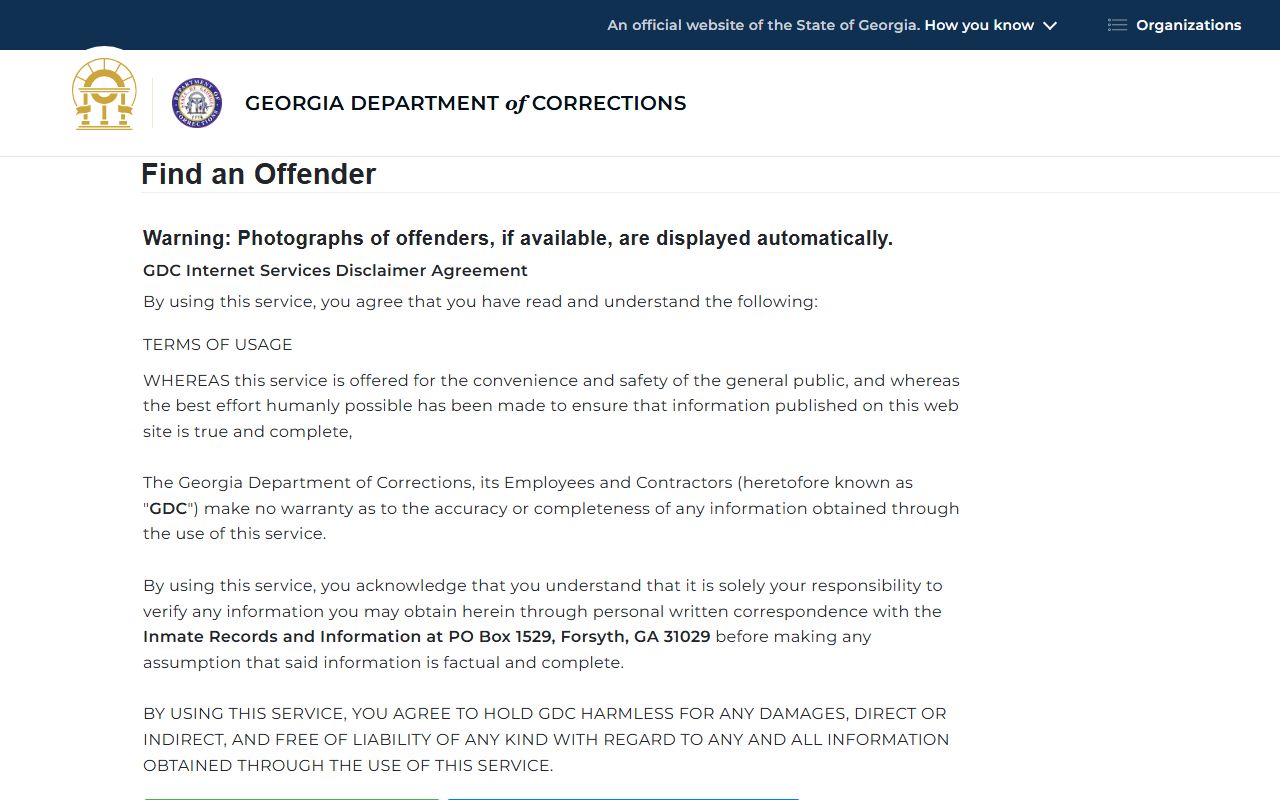
That distinction matters in Screven County because a recent arrest may still be a jail or Magistrate Court issue before it appears in a state offender database.
Screven Charges After Arrest
Charges after arrest are formal court allegations, not proof of guilt. In the Ogeechee Judicial Circuit, prosecutor screening is important because the District Attorney can decide whether to pursue, amend, reduce, or decline charges. The research identifies Jillian Gibson as Acting District Attorney for the Ogeechee Circuit in the current official directory found, and it also identifies Renata Newbill-Jallow as the circuit public defender for qualifying defendants. Those offices can appear in the case record through filings, counsel entries, plea negotiations, and treatment-court referrals.
| Charging Document | Who Uses It | What It Does |
|---|---|---|
| Complaint | Officer, court, or prosecutor depending on case type. | Starts or supports early charge processing, often near warrant, citation, or first-appearance stages. |
| Accusation or Information | Prosecutor. | Files formal charges without using a grand-jury indictment for the count listed. |
| Indictment | Grand jury. | Charges a felony or serious matter after grand-jury action and moves it into Superior Court prosecution. |
Image source: the Georgia.gov Find an Offender guide shows how statewide offender lookup differs from local court charge access.
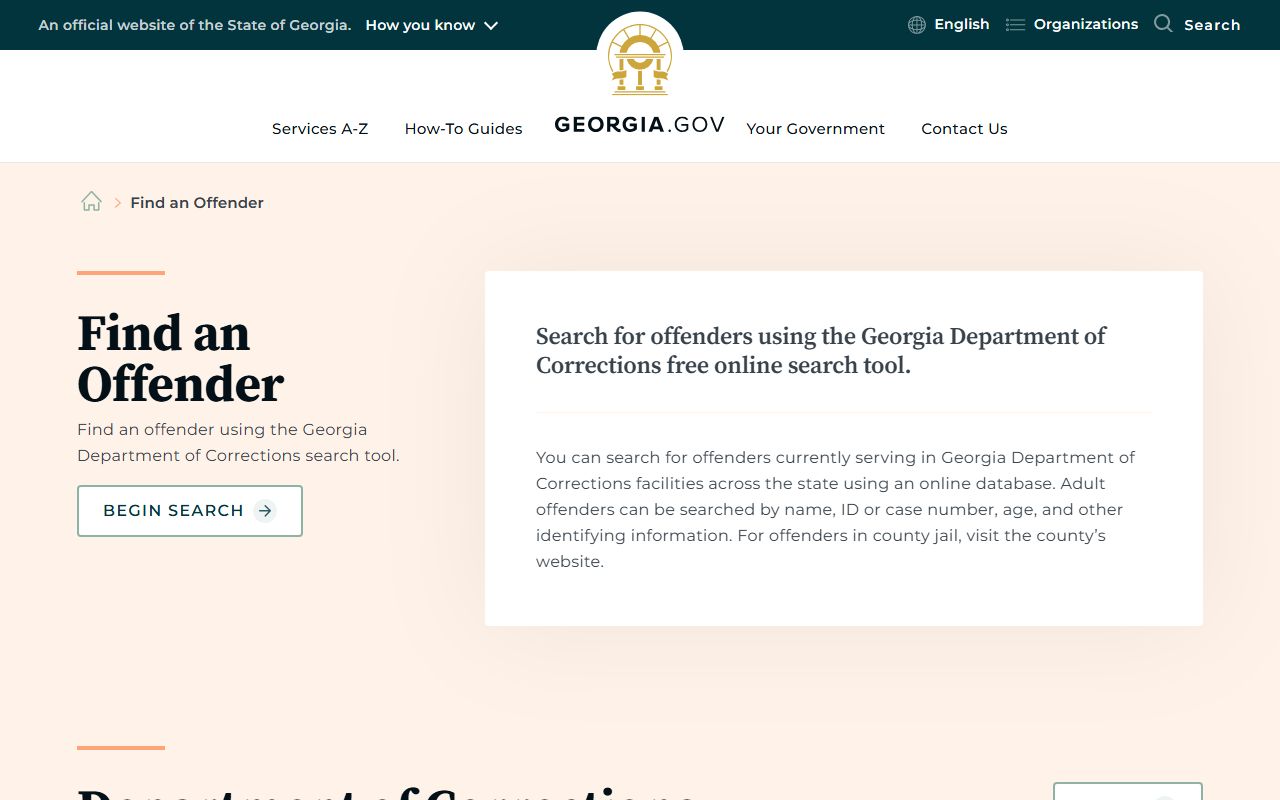
A statewide offender result may help identify a sentenced person, but the local court charge record remains the better place to verify how each count was filed and resolved.
Screven Charge Status Terms
A charge can change several times before final disposition. The docket may show pending counts, amended text, reduced severity, dismissed counts, a nolle prosequi, a plea, or a sentence. In Georgia criminal records, "nolle prosequi" means the prosecutor formally chooses not to pursue that charge. "Dead docket" means the case or count has been placed in inactive status and may sometimes be revived.
| Status | What It Means |
|---|---|
| Pending | The charge remains open and has not reached final disposition. |
| Amended | The charge text, count, or statutory basis changed after filing. |
| Reduced | The charge moved to a lesser offense or lower severity through filing, plea, or court action. |
| Dismissed | The court record shows the charge ended without a conviction on that count. |
| Nolle Prosequi | The prosecutor formally declined to continue the charge. |
| Dead Docket | The matter became inactive, but the record should be read carefully because revival may be possible. |
Charge vs Conviction
An arrest record may list an initial alleged offense. A court charge record may list the offense the prosecutor filed. A conviction is narrower than both. It exists only when the court accepts a guilty or nolo plea, or when a trial results in guilt and judgment. This is why Screven County arrest records should not be read as conviction records.
| Point | Charge | Conviction |
|---|---|---|
| Meaning | An allegation filed after arrest or citation. | A final court result based on plea or verdict. |
| Where it appears | Booking, warrant, citation, accusation, indictment, or docket entry. | Disposition, judgment, sentence, probation, or final order. |
| Can change | Yes, it may be amended, reduced, dismissed, or not pursued. | The sentence or probation may later be modified or revoked, but the conviction is a final outcome. |
| Best source | Read the charge count and docket events. | Read the disposition and sentencing order. |
Statewide Charge and Registry Checks
The GBI sex offender registry is another state-level tool, but it is not a complete arrest-record or charge-record database. The research notes that GBI is the central registry under O.C.G.A. 42-1-12, with information supplied by agencies. A registry result may be relevant when a conviction requires registration, yet it should not be used to infer the status of unrelated Screven County charges.
Image source: the GBI sex offender registry search page is a separate statewide registry connected to qualifying registration law.
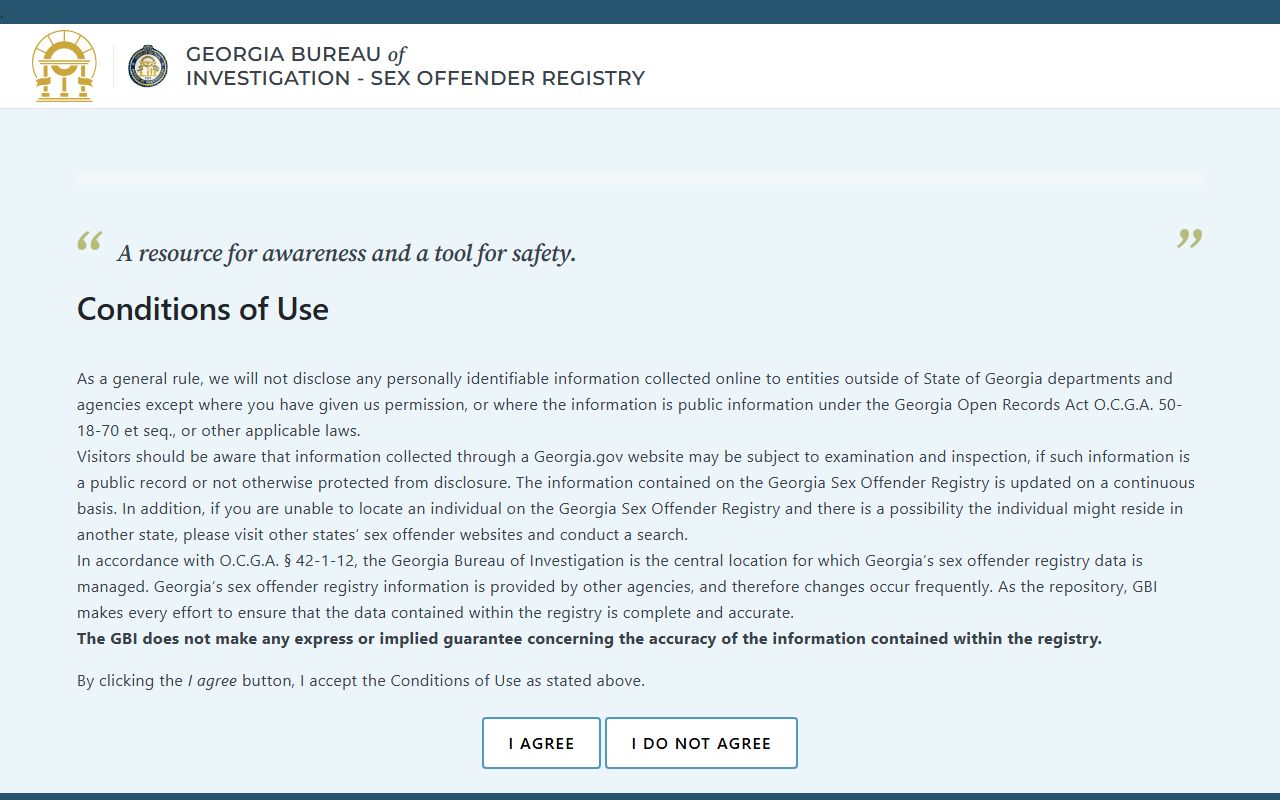
Use the registry as a specific registration source, not as proof that every arrest, dismissed charge, pending case, or sentence is shown there.
Restricted Screven Charge Records
Some arrest and charge information is not public. Juvenile delinquency and dependency files are not handled like adult records. Adoption and mental-health material are restricted. Sealed indictments, sealed warrants, active investigative records, protected addresses, minor names, Social Security numbers, and financial-account data may be withheld or redacted. A public docket can exist even when a document image is not open.
| Record Issue | Public Access Point | Important Limit |
|---|---|---|
| Post-July 1, 2013 arrest restriction | Contact the prosecutor under GBI guidance. | Restriction can limit criminal-history access without erasing all court activity. |
| Pre-July 1, 2013 arrest restriction | Apply through the arresting agency under GBI guidance. | The Sheriff's Office or a city police department may be involved. |
| Juvenile charge | Juvenile Court rules and statutes. | Public admission and file inspection are limited. |
| Sealed warrant or indictment | Issuing court after unsealing, if allowed. | May not be public before arrest, execution, or court order. |
Note: If a charge was dismissed or nolle prossed, verify both the court docket and any separate GBI restriction process before relying on a background result.